Ethan Nguyen builds and inspires through AI, math and endless curiosity
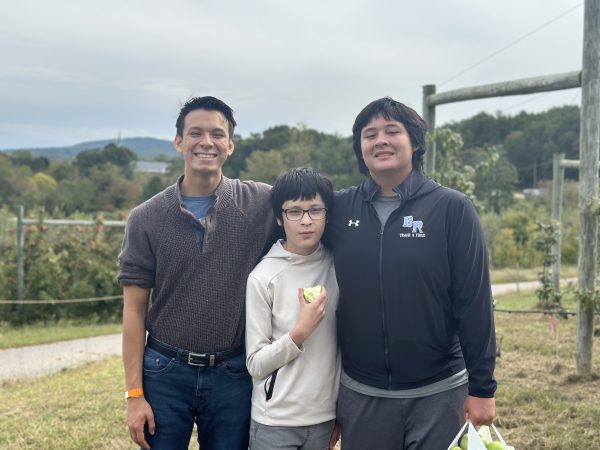
Ethan Nguyen will leave Niner Nation with more than his dual B.S. degrees in computer science and mathematics. He’ll also carry with him the confidence to lead, the passion to research tough-to-crack problems and the drive to create exciting opportunities for the next generation, all lifelong skills he credits to his time at UNC Charlotte.
“If you dream it, you can do it at UNC Charlotte,” Nguyen said.
The College of Computing and Informatics and Klein College of Science double-major has left an undeniable mark on his University community. He’s launched and revitalized multiple student organizations, including CCI’s now thriving Club for AI Research and the CCI Student Council. Nguyen has also worked with CCI faculty on novel research projects in the realm of AI interpretability and now has multiple academic publications under his belt. All the while, he’s worked to create new avenues for learning and growth for his fellow students, from starting events like the now annual Hack CLT hackathon to teaching other student leaders how best to plug-in to University opportunities and funding.
In recognition of his ample contributions, in 2025 Nguyen was the first student to receive the CCI Dean’s Excellence Award, given annually by College of Computing and Informatics professor and dean Bojan Cukic.
“Ethan represents the very best of UNC Charlotte,” Cukic said. “Through his work transforming the Club for AI Research and establishing the CCI Student Council, he has provided his peers with the tools to lead effectively and amplify their impact. From organizing hackathons to opening invaluable dialogue between students and industry partners, he created new spaces for innovation and built a lasting community. He leads with an enthusiasm that should serve as an example for all our students.”
The award was the latest milestone for Nguyen, and a cherished one at that. “A lot of young people aren’t taken seriously, because they’re still figuring things out,” Nguyen said. “When I got the Dean’s award, it was an amazing feeling to know that students really could make an impact, and not just on campus. It was really validating.”
As for what’s next for Nguyen?
“All I want to do is make the world a better place, and to work on really cool projects along the way,” Nguyen said.
Youthful curiosity
A first-generation college student from South Charlotte, Nguyen was always interested in how things work, including the computers he played video games with as a child. Some of his early forays into programming were within the popular game Minecraft. While most other kids would use the game’s vast menu of creative tools to build structures and landscape their dream digital playgrounds, Nguyen was more interested in building a functioning 8-bit multiplication calculator within the virtual sandbox.
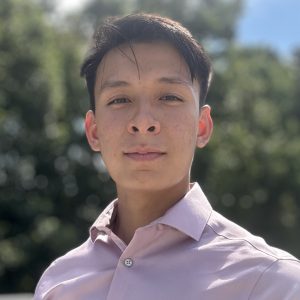
As he grew older, he became fascinated with understanding the workings of the brain and human psychology. Later in high school, Nguyen’s curiosity steered him toward the burgeoning world of AI. He didn’t know it yet, but his interest in psychology, AI and computers would one day lead him to combine all three by studying the fundamental structures of machine intelligence.
Some of the main reasons he decided to become a member of Niner Nation were the school’s affordability and proximity to his family and the Charlotte-area community in which he was raised. While his interest in tech grew over time, Nguyen didn’t come to UNC Charlotte dead set on becoming a computer scientist. He also knew he had a knack for and talent with mathematics. He quickly grew intrigued about the possibilities of pairing mathematical logic and the power of programming.
“I didn’t go into college thinking ‘I want to be a software engineer or a researcher,’” Nguyen said. “I discovered that while going here.”
The age of AI
Nguyen hit the ground running upon arriving at college in fall 2022.
He’d learned through a high school internship about the value of proactively seeking out research opportunities as an undergraduate. That led him to one of his first mentors, former assistant professor of computer science Christian Kümmerle, who introduced him to the world of artificial intelligence optimization research and incorporated him into ongoing projects.
Between his work with Kümmerle and the quickly rising profile of popular artificial intelligence apps with the then-recent advent of ChatGPT, Nguyen became fascinated with both the potential power of AI and the need for society to better understand its capabilities and potential pitfalls. By sophomore year, he’d discovered a small CCI student group, the Club for AI Research.
When Nguyen joined CAIR, he was one of only three members in the nascent organization. Encouraged by a student support advisor to think creatively about how to grow the group, he approached the then-club president about the idea of CAIR hosting student-focused AI literacy programming at a time when there weren’t many alternatives available.
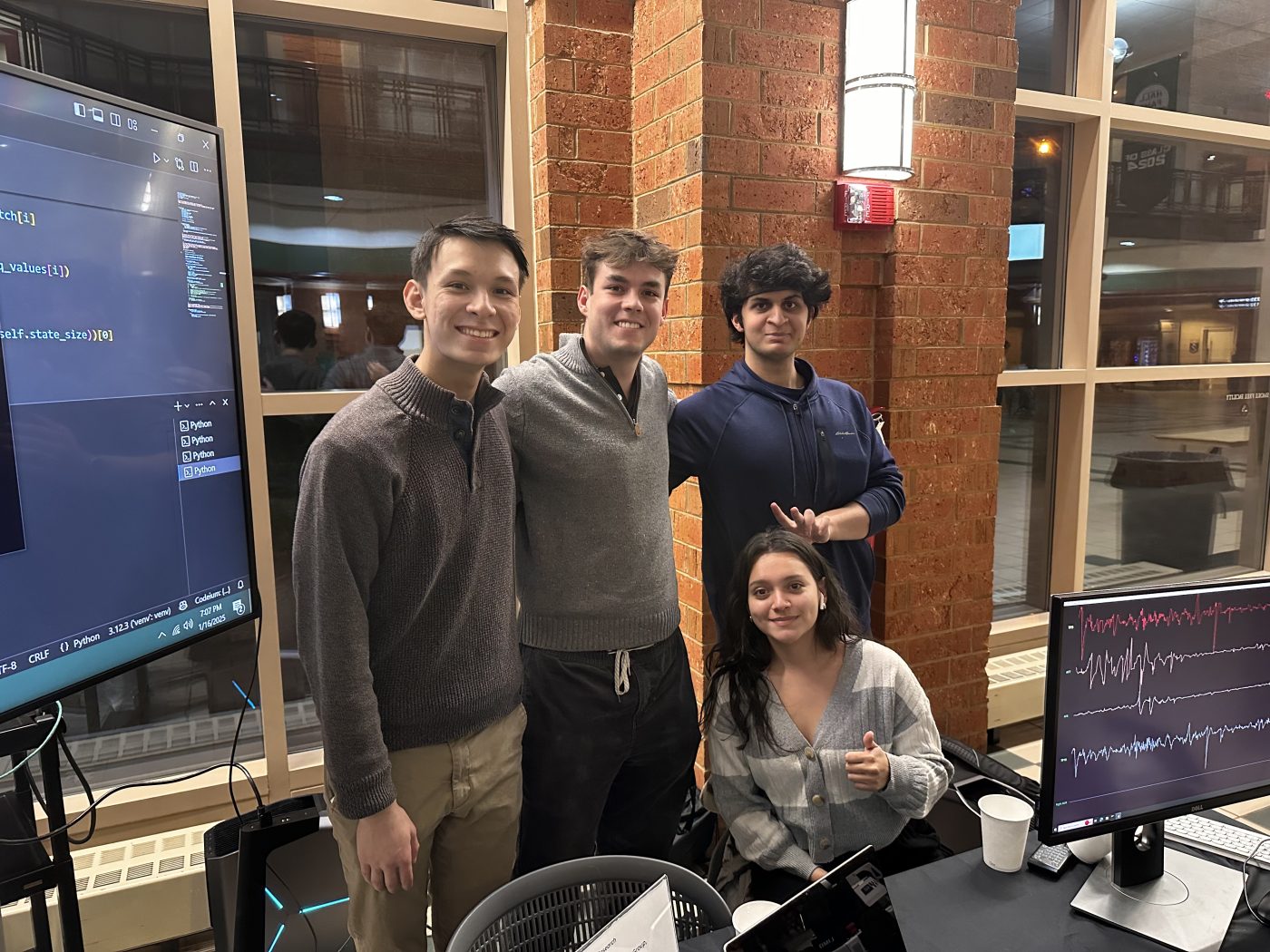
Soon, they were picking up steam. After a few weeks, the organization had modestly grown to around ten members. With more students eager to work together on interesting AI-related projects, Nguyen sought the counsel of Min Shin, professor and department chair of computer science. After meeting with Shin, the professor began to advise Nguyen and his fellow CAIR students on how to grow their project footprint and build collaborations across CCI. For one early project, Shin gave CAIR a small research-grade robot named Apollo, and challenged the students to use AI algorithms to train the robot to traverse campus on its own.
Nguyen had grown to love not only AI research, but the excitement and sense of purpose that came from actively working toward creating new, impactful experiences for his fellow students. Soon, he was elected president of CAIR, launched multiple new projects and started seeking guidance from his mentors on how to be an effective student leader.
Thanks in large part to Nguyen’s eager stewardship, CAIR’s ranks have now swelled to over 40 engaged student researchers, though this wasn’t the only way Nguyen has worked to broaden possibilities for UNC Charlotte students. He was instrumental in starting the student organization Hack CLT, which in 2024 and 2025 hosted some of the University’s first large-scale hackathon events, bringing together tech-minded students of all backgrounds to work collaboratively on innovative computing projects.
Entering his senior year, Nguyen transitioned into an advisory role with CAIR, which gave him more bandwidth to start sharing what he’d learned through leading CAIR and Hack CLT with other CCI student leaders. He founded a new group, the CCI Student Council, that connects experienced club and organization leaders with new student leaders looking for advice on how to navigate University processes and to learn about the best ways to plug in to funding opportunities, to name just a few aims of the council. He’s also continued his AI research endeavors as a member of the Charlotte Machine Learning Lab, co-directed by assistant professors of computer science Xiang Zhang and Srijan Das.
Lessons and LASR
Now with years of coursework, extracurricular projects and scholarly mentorship under his belt, Nguyen has settled comfortably into a particular niche of AI research called “mechanistic interpretability,” which deals with mapping out the internal mechanisms underpinning AI models.
“There’s so much about the internal workings of these AI models’ internal workings that humans don’t understand,” Nguyen said. “What we work on is turning all of a model’s intelligence and knowledge into a mapped-out space which people can interpret and explore.”
“I’m interested in understanding what AI models are capable of,” he continued, “what kind of information are they aware of that we didn’t know they’re aware of, and how we can better use that knowledge to align and make sure these models are safer.”
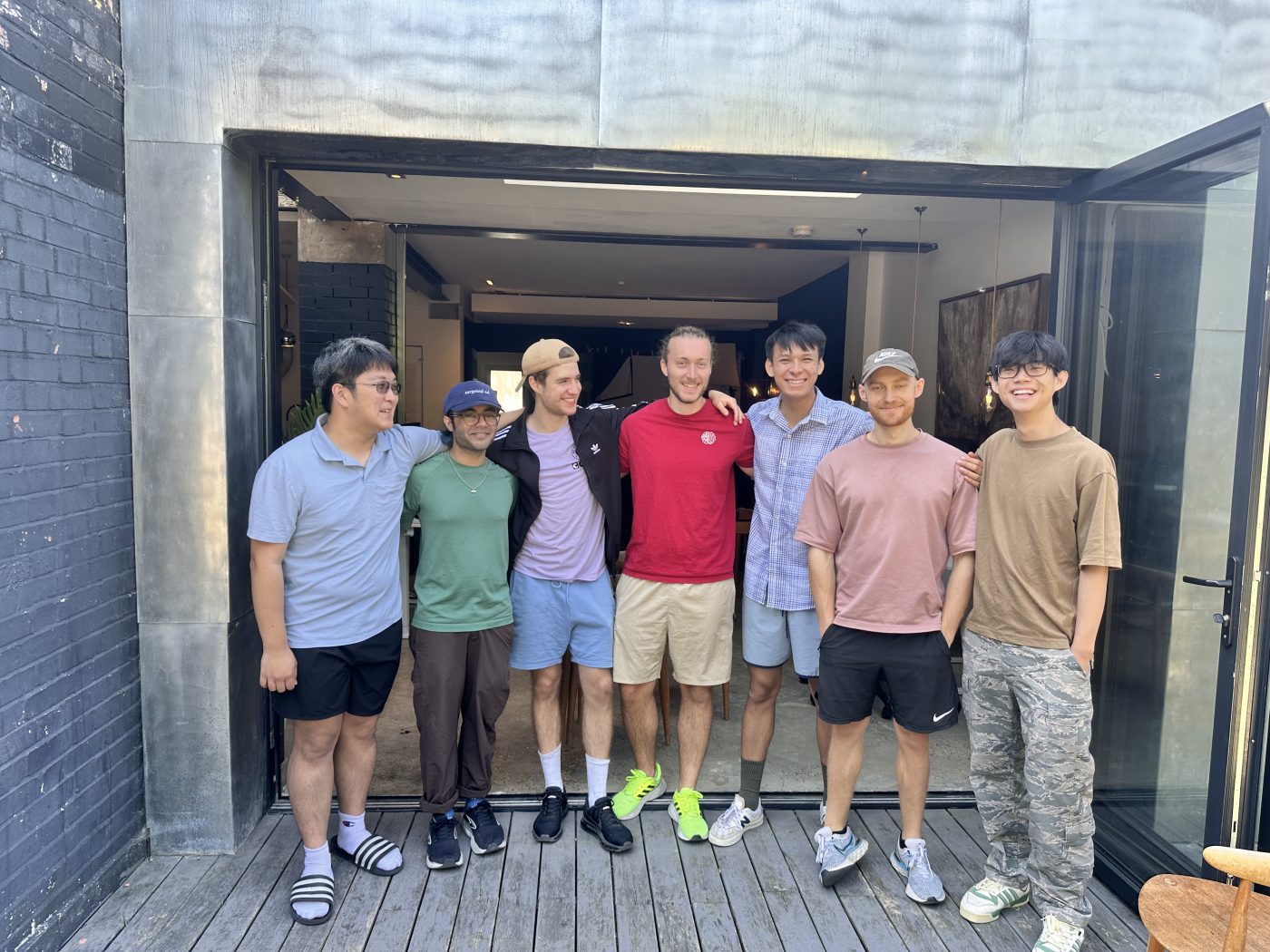
This past summer, Nguyen participated in an AI security bootcamp in London, during which he was able to build connections and form relationships with young AI researchers from around the world, including those at a London-based group called London AI Safety Research Labs, or LASR Labs for short. After his graduation, Nguyen will hop on an airplane back to London for his next adventure: joining the LASR Labs team full-time as a research fellow working on AI safety initiatives and furthering his mechanistic interoperability work.
Nguyen is confident that the lessons he’s learned from CCI and at UNC Charlotte will stay with him long after commencement. By integrating what he describes as “the art of asking good questions” reinforced by his mathematics education and the hands-on programming and development principles gained through AI endeavors in the world of computer science, Nguyen has landed on a particularly potent combination.
The final, most impactful ingredient in Nguyen’s journey at UNC Charlotte is simple: the people who work every day to make the University a better place for students to grow and learn.
“There are so many amazing, very kindhearted people here who are out to help the world, help students and help each other,” Nguyen said.