Worlds away: Ph.D candidate Sarah Tabassum helps keep foreign students cyber-safe
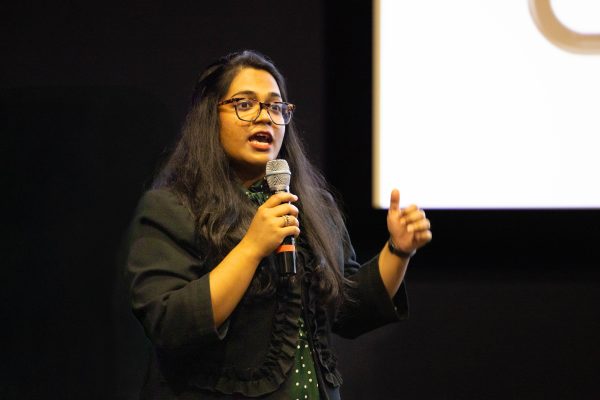
Sarah Tabassum, a Ph.D candidate in UNC Charlotte’s College of Computing and Informatics, knows firsthand the unique challenges that face students who relocate thousands of miles away from home to pursue their education in a foreign country. It’s the type of transition — fraught with new contexts, new norms, new fears and new threats — that can leave even the most brilliant of scholars vulnerable to falling victim to scammers and cyber thieves.
Several years after leaving her home country of Bangladesh to study computer science in the Queen City, Tabassum has conducted impactful research on the cybersecurity experiences and vulnerabilities of international college students. In collaboration with mentor and doctoral advisor Cori Faklaris, assistant professor of software and information systems, and the financial support of Google through a cybersecurity-focused research grant, Tabassum’s work sheds new light on the specific factors that lead foreign students to fall prey to digital con-artists and how best to protect them going forward.
“My research shows that digital security is deeply human, not just a technical problem,” Tabassum said. “I work to connect with that human perspective and how people’s lived experiences can change how they use technology to determine how to design systems that are secure and usable at the same time.”
“The support from my 2024 Google Research Scholar grant [for designing an AI-powered security and privacy assistant] allowed Sarah to bridge the gap between academic theory and real-world application,” said Faklaris. “Her ‘triple presence’ framework is an insightful evolution of how we understand migrant identity and the journey of international students specifically. She has been an indispensable partner in developing AI-driven tool designs that prioritize the safety of college students and other at-risk groups for scams.”
Back in Bangladesh, Tabassum completed her undergraduate education in computer science and engineering. “During my undergrad I was very interested in work like deception detection and how to detect fraud,” she said, an interest that continued to blossom as she worked as a university lecturer after completing her first degree.
Enticed by UNC Charlotte’s track record of cybersecurity leadership and the University’s welcoming environment for students of all backgrounds and nationalities, Tabassum joined Niner Nation as a doctoral student in fall 2021. She’s worked on a number of research projects along the way to completing her dissertation in May 2026, including a detailed exploration of SMS text message phishing susceptibility among cell phone users in the U.S. That study later became the topic of her top-ten placing lecture in Charlotte’s 2025 3 Minute Thesis research communication contest.
The “smshing” study proved to be a launching pad for additional fruitful research that would ultimately be supported by Google funding. During that first project, Tabassum realized that the immigrants who participated interpreted scam text messages differently than did lifelong U.S. residents. To explain this, she built on the academic phenomenon of the “double presence” phenomenon used by scholars to explain the different ways that migrant students segment and experience their digital lives when they are interacting with their host country’s prevailing norms and when they are interacting with family and friends based on the norms of their home country.
In order to better understand the unique digital privacy and security vulnerabilities faced by international students, Tabassum and colleagues expanded on the “double presence” framework by conceptualizing the idea of “triple presence.” This evolution additionally accounts for the unique digital practices and identity-based behavior that these students exhibit along with their fellow migrants from their same country of origin in the U.S. diaspora community.
Tabassum found that the effort it takes international students to maintain these three distinct online identities is a quite large mental burden. Coupled with the shift from these students’ more stable situations in their home countries to the uncertainty of moving to a new country, this additional mental stress and strain can make international students uniquely vulnerable to scammers. Criminals often target international students by posing as U.S. authority figures like government representatives, landlords or university officials asking for money, payment in the form of gift cards, or potentially valuable personal information on allegedly urgent timelines.
“We often think of educational migrants and international students as tech-savvy and highly knowledgeable people — so why are they so vulnerable? It’s all about their context and their journey,” Tabassum said.
In a later study, Tabassum and her collaborators sought to figure out how these unique digital vulnerabilities international students face could be addressed to prevent them from falling victim to scams. To do so, they set up a “participatory design” experiment where international students would have the opportunity to provide their input on what types of digital tools could help prevent scams, all based on their own lived experiences.
To start, participants were shown a “story board” that visually depicted an international student coming to the United States who received an email from a scammer allegedly offering scholarship funding in exchange for divulging detailed personal information.
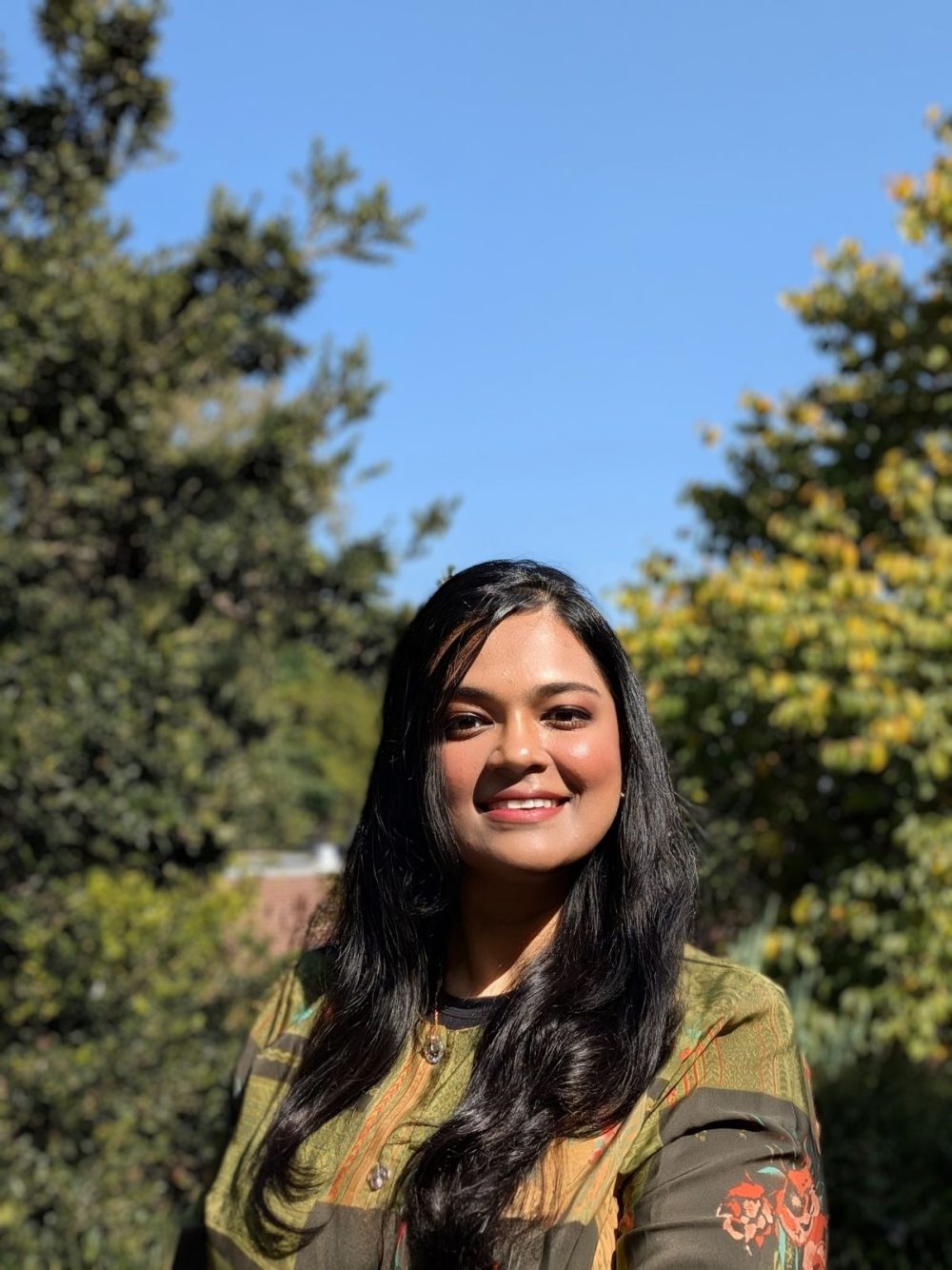
“We then asked them ‘Did you face anything like this?’ and they shared their experiences,” Tabassum explained. “Then, we asked them if they could share any design or tool-idea that could have helped them in that moment.”
Over the course of several design sessions, a few key themes and ideas emerged about possible digital tools and processes that could help protect international students from falling victim to cyber crime. These included contextually triggered markers in communications about topics like urgently needing money or suspicious seeming links, a computer or smartphone-based tool from the University to let international students contact a trustworthy person who could help vet requests that seemed suspicious, and additional safety cues to verify an email or text message author’s identity to ensure someone wasn’t posing as them in order to steal money.
“If they do not know who to ask for advice or where to go for help, the scammers and bad guys take their chance in that moment of confusion,” Tabassum said.
Tabassum and Faklaris credit a 2024 Google AI Cybersecurity grant awarded to Faklaris with making these research experiences possible for Tabassum. Not only did Google funding allow Tabassum to conduct these studies, but it also allowed Tabassum to expand her horizons through funding travel to top computing conferences where she could present her work and build connections with other cybersecurity scholars in academia and industry.
Faklaris and Tabassum continue to work on novel research funded by Google, including a major project to build an AI-powered cybersecurity “buddy” program that could proactively protect users from digital threats while educating them about current best practices and tips for good cybersecurity hygiene. Tabassum’s work on international student cybersecurity has deeply informed the broader project, and her findings will be incorporated into the final proposed tool designs.
“From her top-tier research publications to her success in the 3 Minute Thesis competition, Sarah has proven herself to be a powerhouse in both research and communication. She doesn’t just study cybersecurity; she champions the human dignity of every user she seeks to protect,” said Faklaris.
“The Google grant really helped us to do these studies,” Tabassum said. “Our findings showed that people genuinely depend on Android’s SMS filtering systems and trust them as a first line of defense against scams and fraud. That’s why I believe Google, as a pioneer in this space, has a unique opportunity to drive meaningful change and shape the future of safer mobile communication. I am excited about what could come next.”